The Vertical Silence: Why a Wall Street Titan Traded Manhattan for the Carpathian Peaks

The air in Lower Manhattan doesn't circulate; it vibrates. For twenty years, Nikola lived within that vibration. It was a world of brushed steel elevators, the rhythmic flicker of Bloomberg terminals, and the predatory hum of a city that never stops asking for more. To the outside world, Nikola was the quintessential success story: an immigrant’s son who had mastered the high-stakes geometry of international finance.
But ten years ago, he realized he was starving in the middle of a feast.
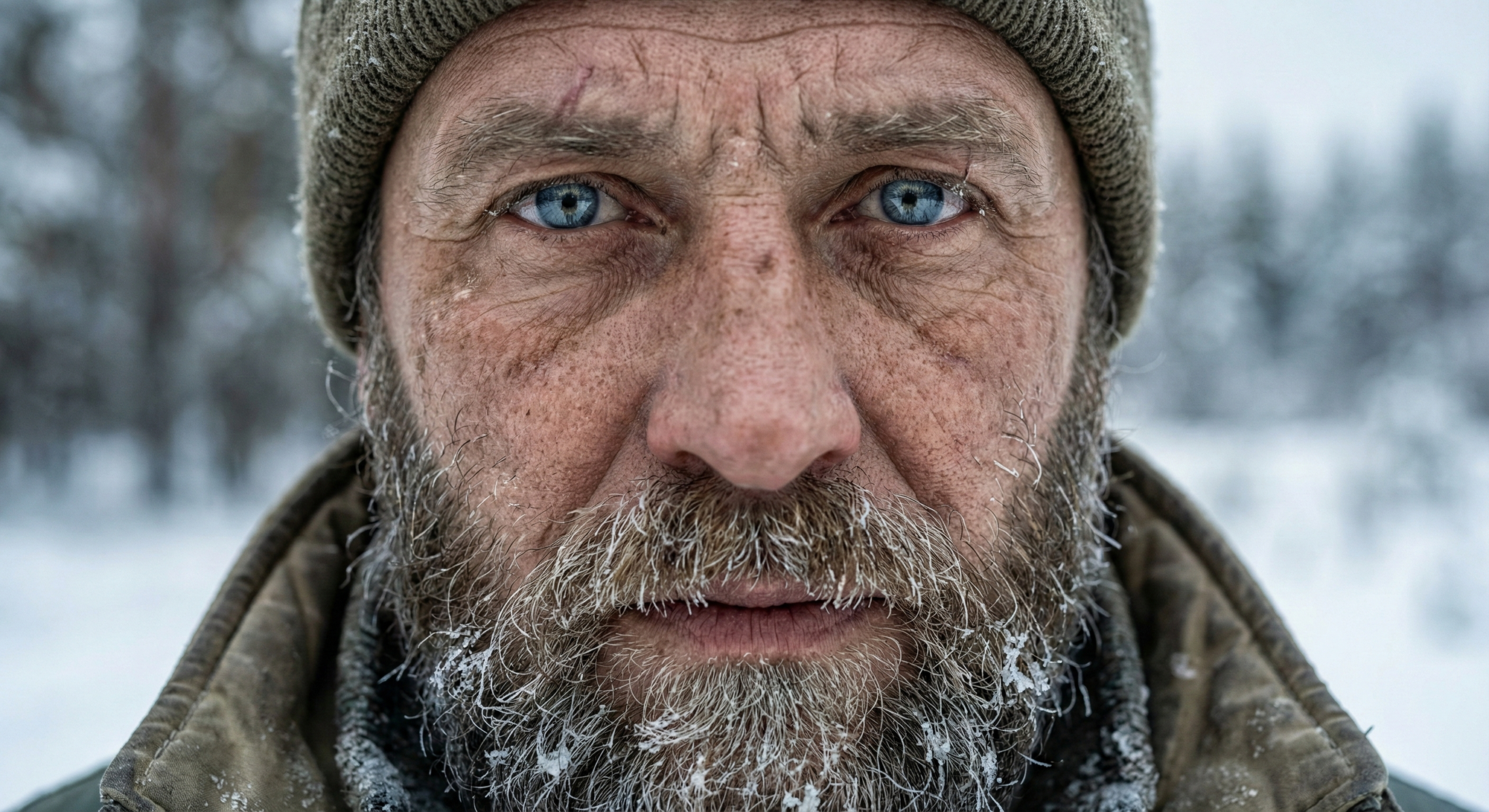
Today, the only vibration Nikola feels is the low, tectonic groan of the wind moving through ancient spruce forests. He is fifty years old, with a face that has been slowly reclaimed by the elements—etched by sun, frost, and the profound, heavy stillness of the Carpathian Mountains. He is a man who didn't just leave his job; he executed an escape from the system so absolute that it felt like a second birth.
The Empire of Paper
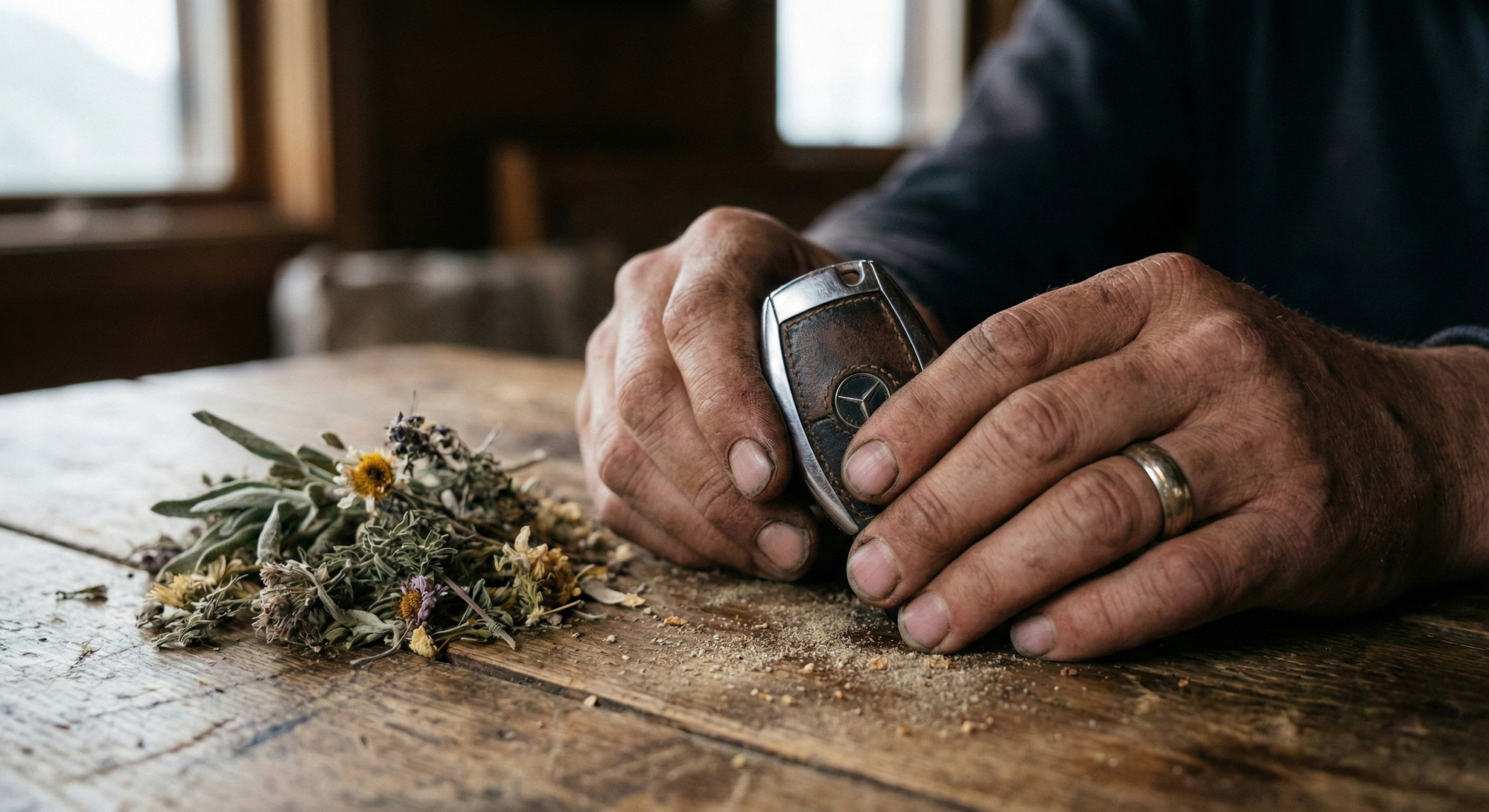
Nikola’s journey began in the back of a crowded transport heading away from the Soviet Union. He was barely a year old when his parents landed in New York, carrying nothing but a suitcase of memories and a desperate hunger for the American Dream. He grew up in the shadow of the skyline, fueled by the immigrant’s directive: work harder, climb faster, be indispensable.
He followed the script to the letter. A degree in finance led to a career that was less a job and more a siege. By his late thirties, Nikola was navigating the high-pressure corridors of global markets. His life was measured in basis points and red-eye flights. He had the penthouse, the prestige, and the crushing, invisible weight of "responsibility" that kept him tethered to a blackberry at three in the morning.
"In that world, you don't own things," Nikola says, his voice now carrying the soft, gravelly cadence of someone who speaks more to the trees than to people. "Things own you. Your time is a commodity traded by others. I was a part of a machine that produced nothing but more machine."
The burnout wasn't a sudden explosion; it was a slow, agonizing erosion. He began to feel a phantom limb syndrome for a place he had never truly known—a landscape of ridges and valleys that lived in the fading stories of his grandparents. He realized that for all his wealth, he had no roots. He was a digital ghost living in a glass cage.
The Ancestral Echo
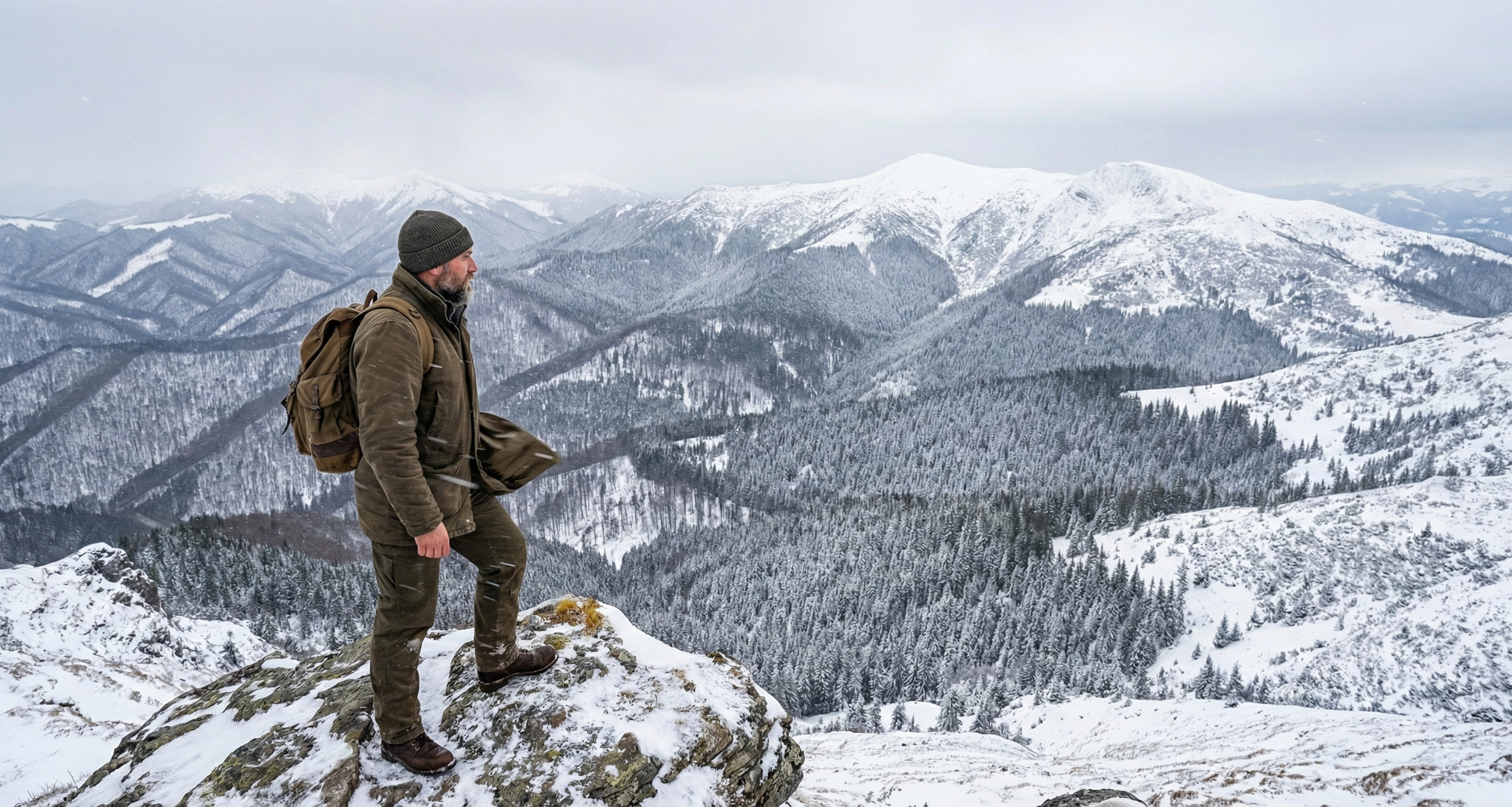
The decision to leave wasn't a mid-life crisis; it was an act of conscious solitude. Nikola began to look toward the East, toward the jagged spine of the Carpathians where his lineage had begun. There was no family estate waiting for him, no grand manor to inherit. When he finally walked away from the New York skyline, he was looking for a ghost.
He found it in a remote, forgotten fold of the mountains. It was a ruin—a skeletal timber hut that had been surrendered to the rot and the moss decades ago. It had no electricity, no road access, and no connection to the grid he had spent his life servicing. To his former colleagues, it looked like a tomb. To Nikola, it looked like a sanctuary.
"I didn't come here to die," he explains, leaning against a hand-hewn beam of the house he spent three years painstakingly rebuilding. "I came here to see if I was still alive under all that noise."
The transition was brutal. The man who once managed millions of dollars found himself struggling to learn the physics of a wood-burning stove and the temperament of mountain weather. But with every stone he hauled and every timber he notched, the "ticker tape" in his brain began to slow down. He was no longer chasing a projection of the future; he was finally inhabiting the present.
He traded the "life of more" for a quiet life governed by the sun and the seasons. He left behind the frantic pursuit of status to find the luxury of a long, uninterrupted thought. He was no longer a financier; he was a man returning to the soil that had once birthed his ancestors.
Nikola had finally found his home, but the mountains were about to teach him that living in peace is the hardest work he would ever do.
The White Silence: The Art of Living Outside the Machine
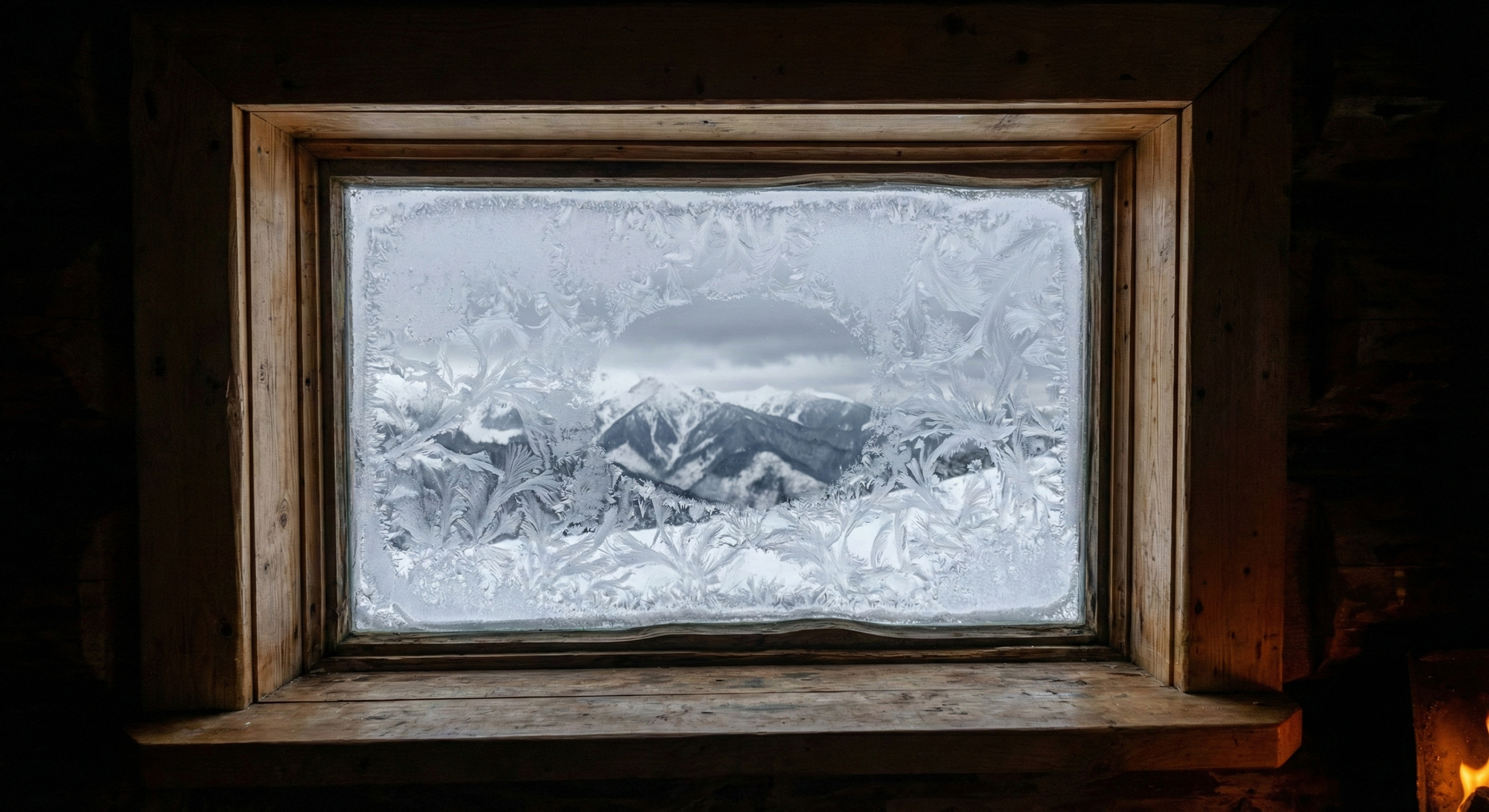
In the mountains, the day doesn't start with a notification; it starts with a temperature. When Nikola wakes, his first act isn’t checking the markets, but reading the frost on the inside of his window. This is the reality of a quiet life—one where the primary currency is no longer capital, but calories and wood.
Ten years into his life outside civilization, Nikola has stopped "surviving" and started inhabiting the landscape. His daily routine is a masterclass in slow life, a rhythmic dance with the elements that makes his former Manhattan existence feel like a fever dream.
The Liturgy of the Mundane
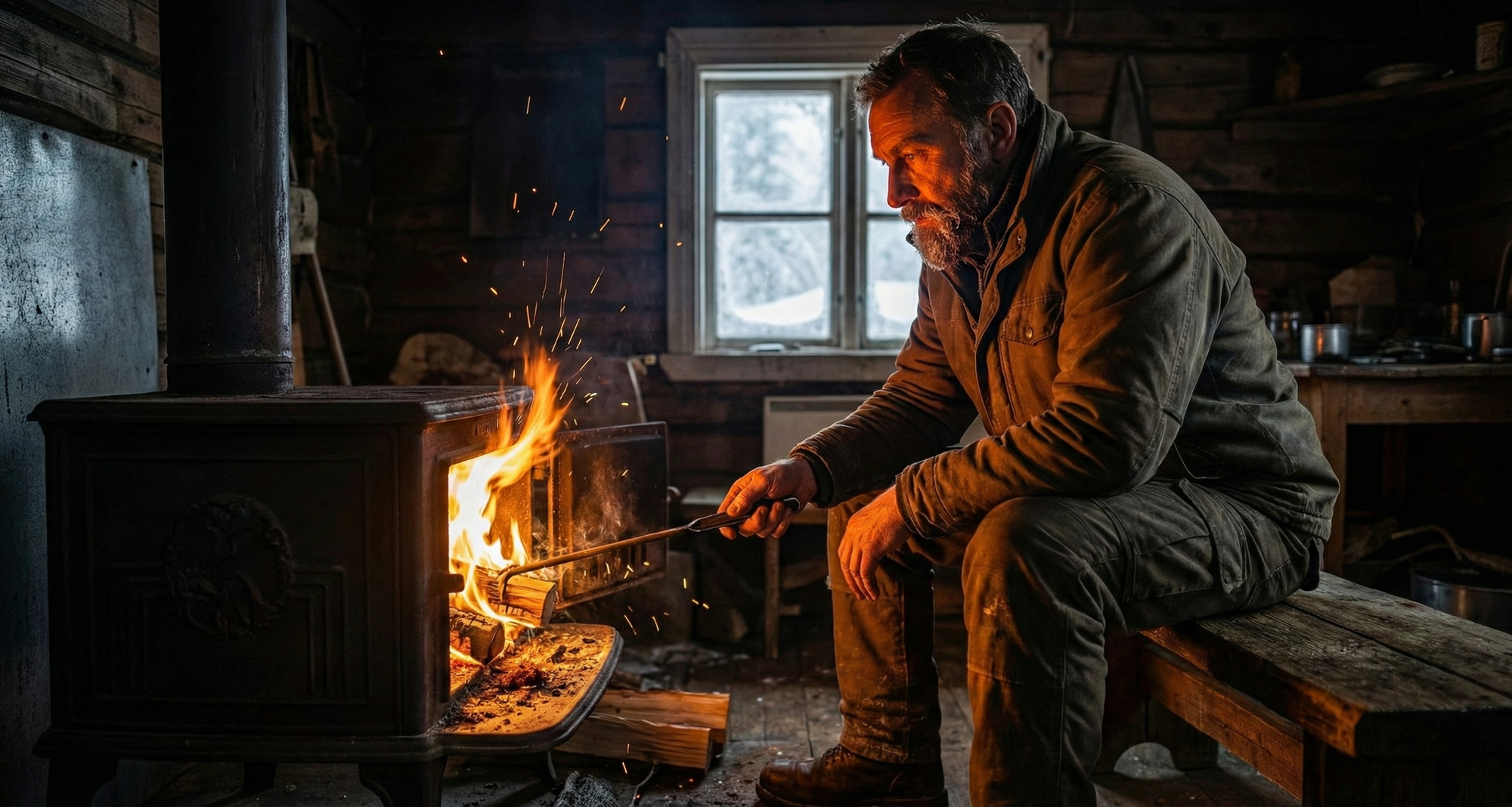
Morning for Nikola is a physical negotiation. Before he can have coffee, he must earn the fire. There is a meditative quality to the splitting of spruce logs—the sharp, resinous scent of the wood, the predictable bite of the axe. This isn't a chore; it’s a grounding ritual.
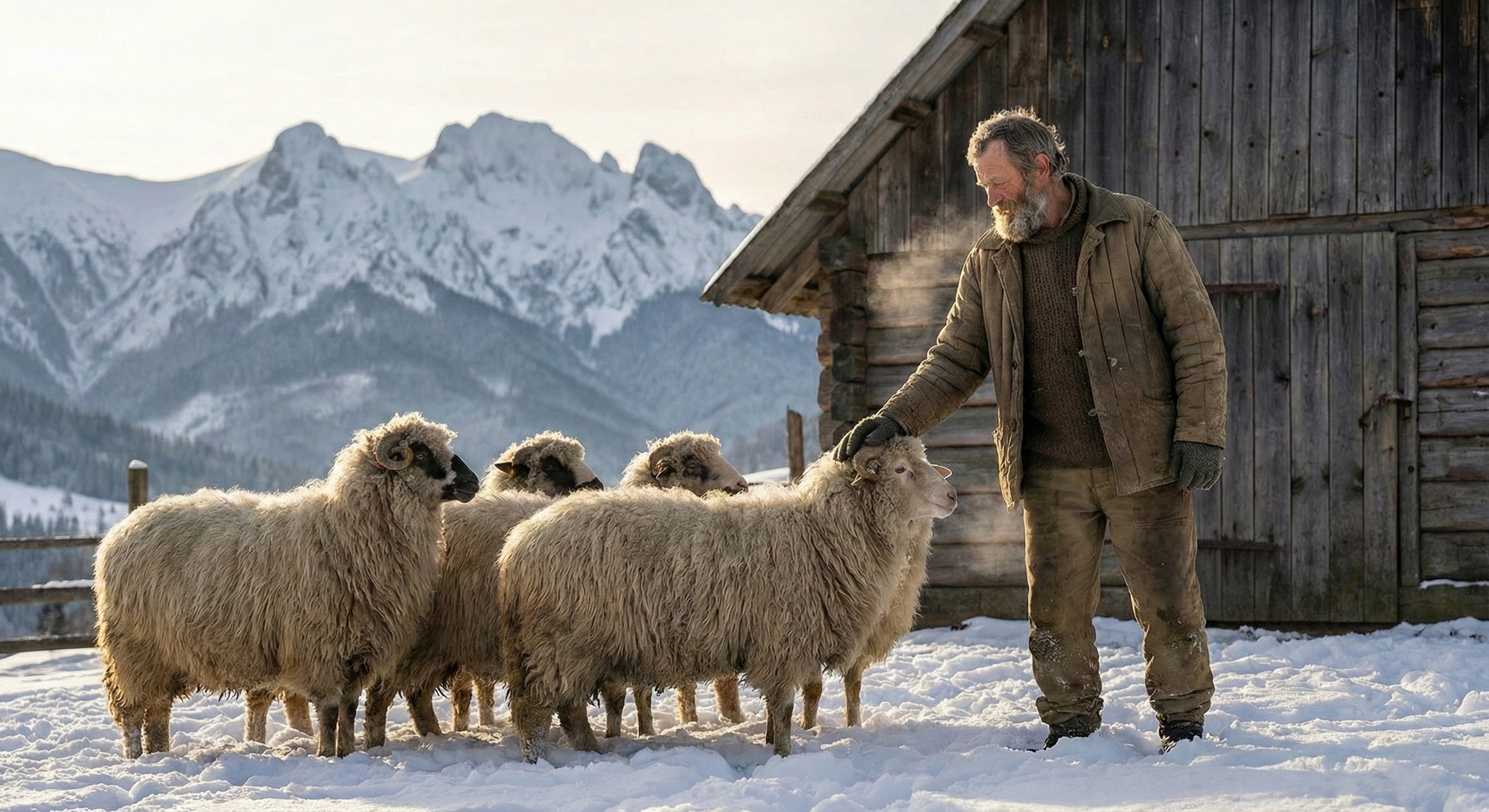
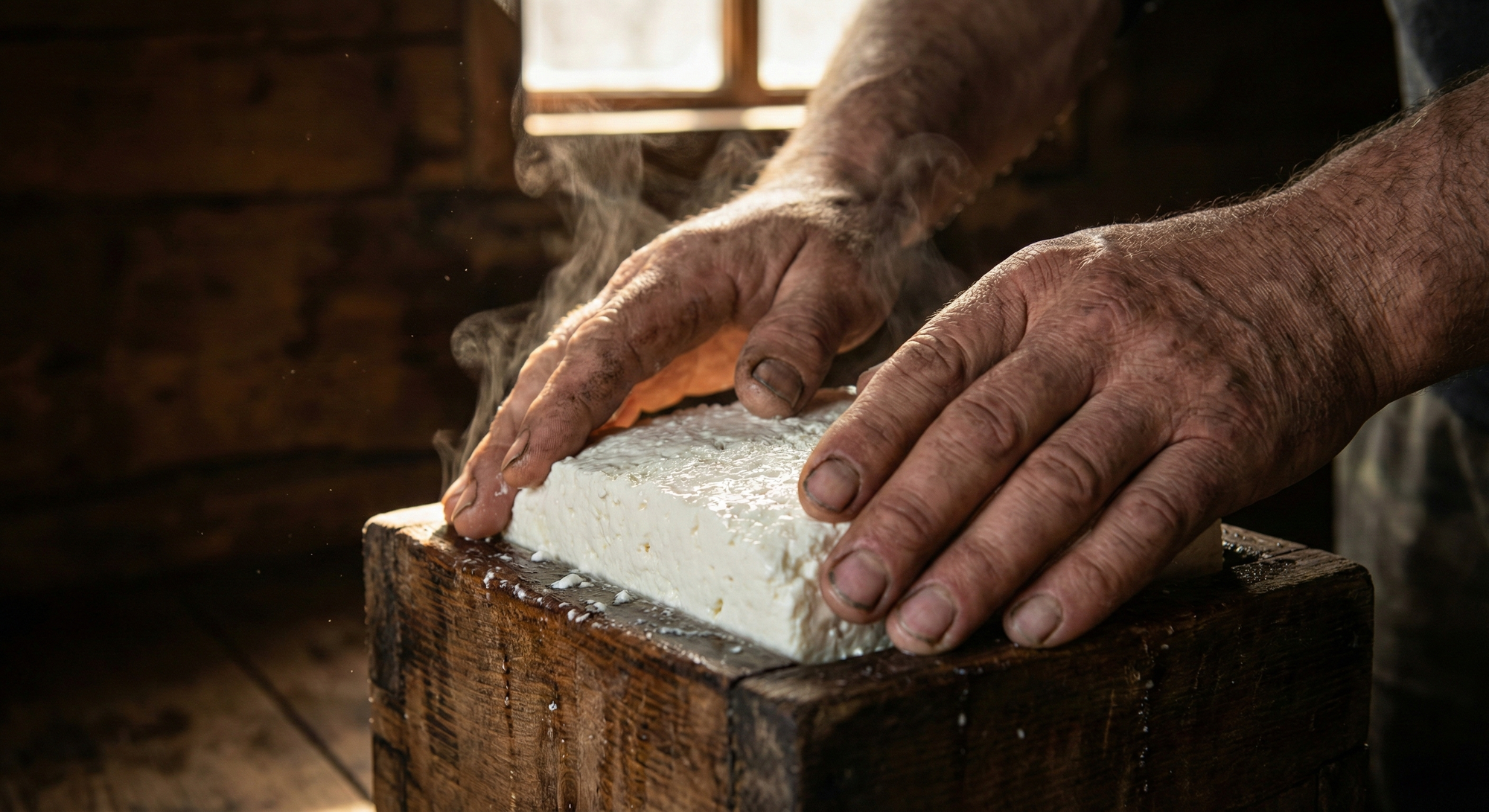
His small flock of sheep provides the structure for his days. These animals are his companions and his livelihood. In the high summer, he moves with them through the alpine meadows, harvesting the wild herbs that will later flavor his brynza cheese. The process of making cheese by hand—stirring the milk in large wooden vats, feeling the curd change texture under his fingers—is where he found the "flow state" that high-frequency trading never could provide.
"In New York, I was constantly trying to save time," Nikola says, stirring a pot of kulesha (cornmeal porridge) over the stove. "Here, I spend time. I invest it in the things that actually sustain me. When you grow your own food and build your own shelter, the distance between effort and reward vanishes. That is the ultimate transparency."
The Winter Occupation
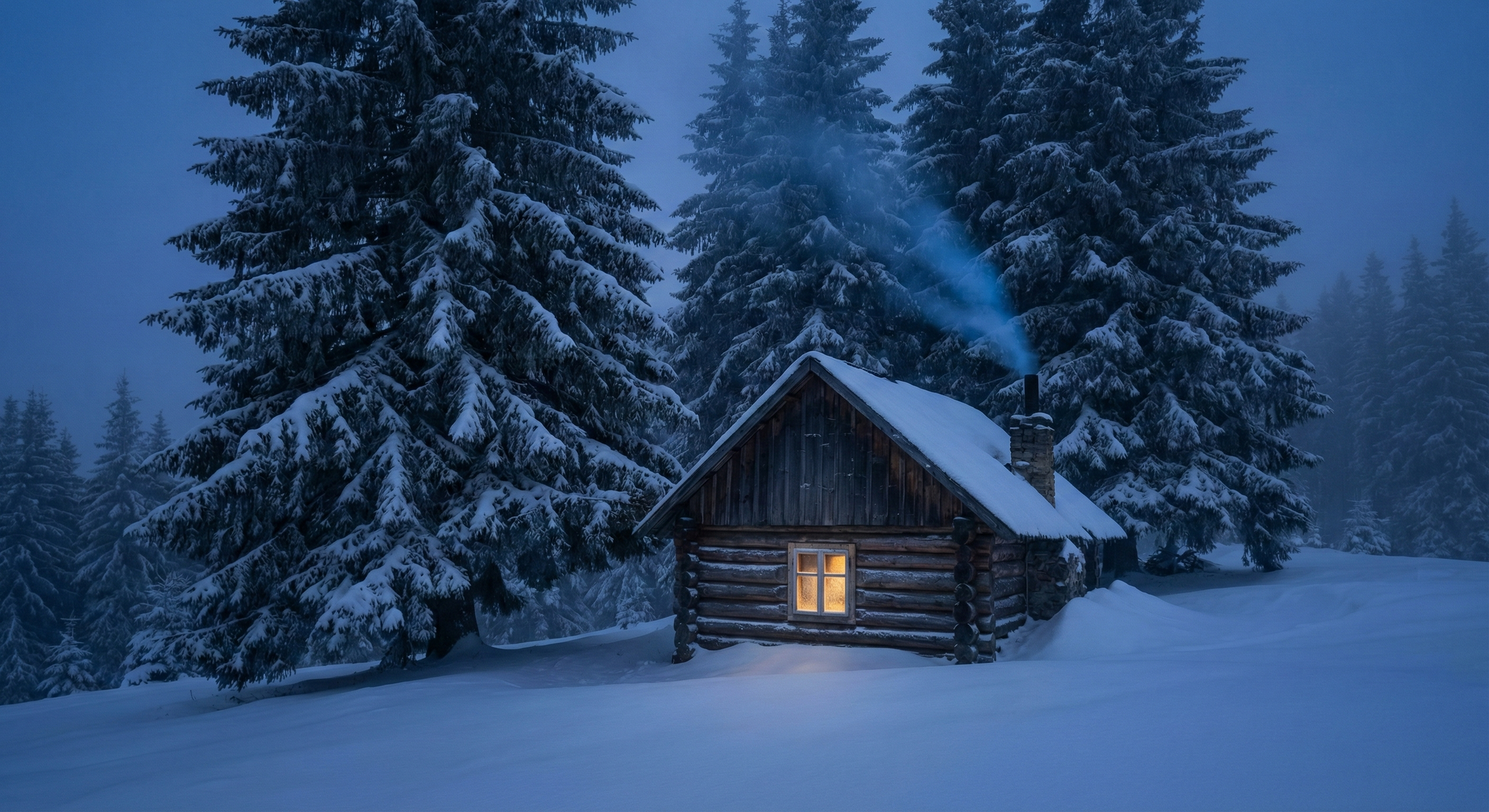
While the modern world views winter as an inconvenience to be managed by thermostats, for a mountain hermit, it is the defining season. When the heavy Carpathian snows arrive, the world shrinks. The trails to the nearest outpost vanish under two meters of white powder, and the "Big Silence" begins.
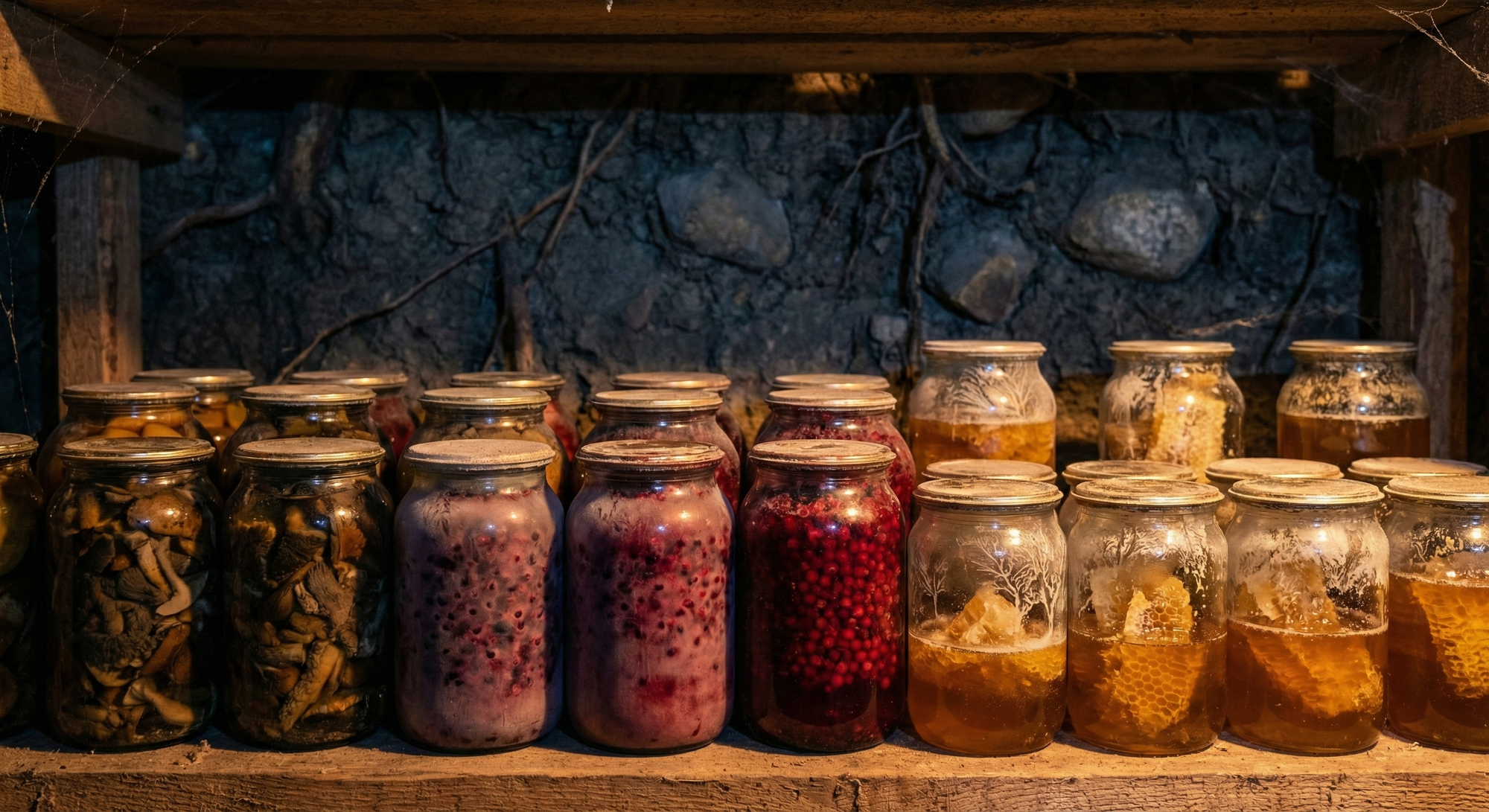
Winter is when Nikola’s conscious solitude reaches its peak. His larder is a colorful mosaic of the previous six months: jars of fermented forest mushrooms, dried blueberries, salted mutton, and stacks of hard cheese. Survival in the winter isn't about strength; it’s about foresight.
"The cold is a great teacher," he observes. "It strips away everything unnecessary. When the wind howls outside at thirty below, you don't think about your legacy or your net worth. You think about the integrity of your roof and the heat in your hearth. It forces a radical honesty upon you."
During these months, Nikola turns inward. He reads by the light of beeswax candles—books that require the kind of deep, focused attention that the digital world has all but destroyed. This is the "luxury of the long thought," a state of being that is only possible when you have successfully achieved a escape from the system.
The Wealth of Poverty
To the casual observer, Nikola’s life might look like one of deprivation. He has no high-speed internet, no climate control, and no social circle. But to Nikola, this is the most opulent his life has ever been. He has reclaimed the one thing that Wall Street tried to buy from him every single day: his own attention.
His life in the mountains has taught him that "success" is a subjective metric. In his previous life, he was a prisoner of his own status. Now, his status is defined by his autonomy. He is a man who knows exactly where his water comes from, how his heat is generated, and what his hands are capable of creating.
"People talk about 'finding themselves' as if they are lost under a rock somewhere," Nikola smiles, his eyes reflecting the orange glow of the embers. "You don't find yourself. You strip yourself. You peel away the layers of expectations, the noise of the media, the pressure to perform. What’s left at the core—that’s who you are."
As the sun dips behind the jagged ridge, casting long, violet shadows across the valley, Nikola steps outside to secure the sheep pen. The air is so still he can hear the beat of a raven’s wings overhead. There are no sirens, no hum of traffic, no distant roar of the city. There is only the wind in the smereka trees and the profound, heavy peace of a man who finally decided that enough was enough.
In the heart of the mountains, Nikola isn't hiding from the world. He has simply found a better one.
Nikola’s journey is a powerful testament to the human spirit's enduring need for stillness. If you find yourself drawn to the raw beauty of a quiet life and the resilience of those who choose to live outside the system, we invite you to join our community. Subscribe to our channel, where we produce and curate cinematic documentaries about individuals who have dared to step away from the digital noise to find their own truth in the world's most remote corners.