The Quiet Strength: A Day with a Woman Living in the Carpathian Mountains

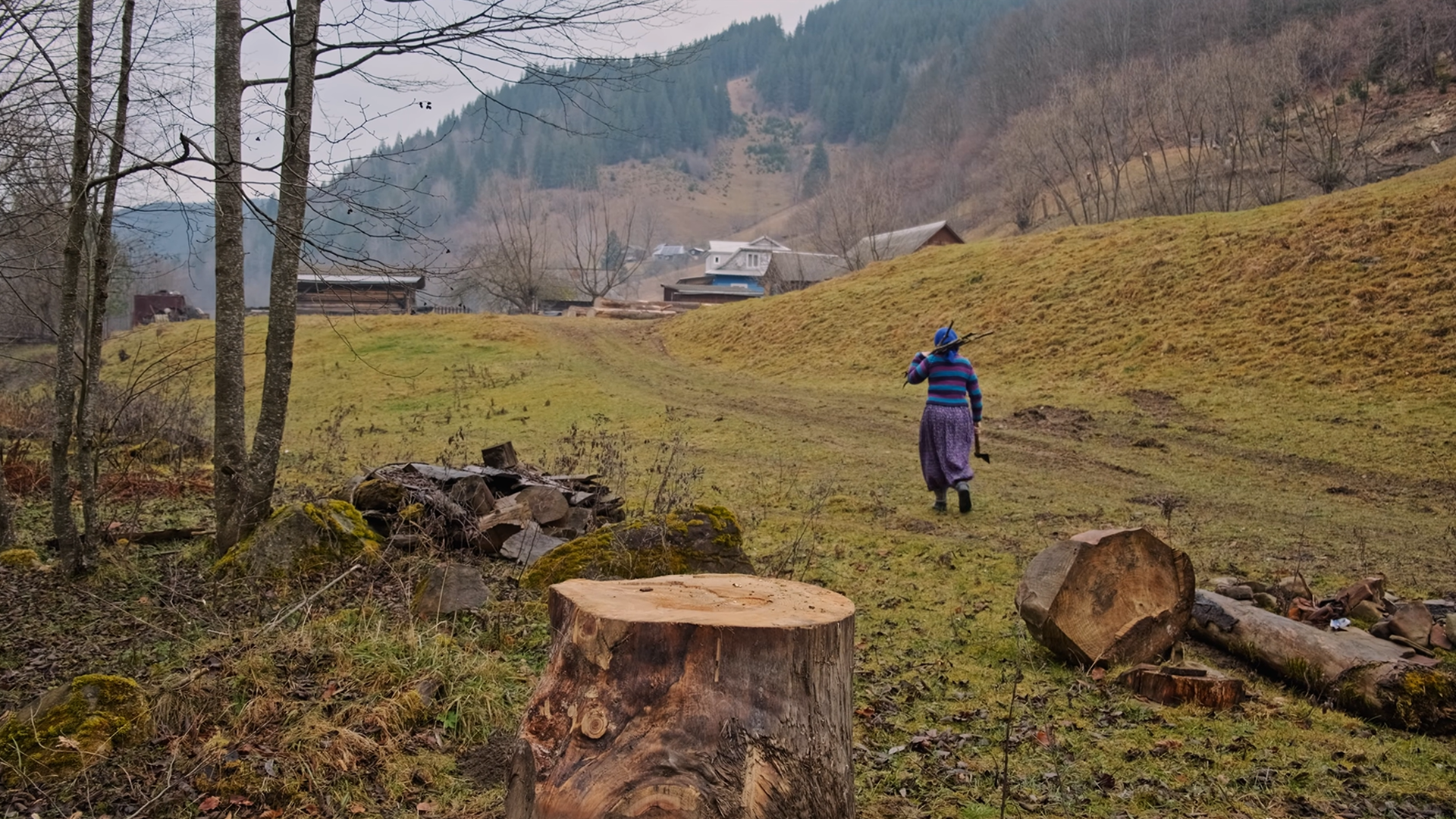
In the remote highlands of the Carpathian Mountains , life follows a rhythm that has remained largely unchanged for generations. This is the home of Maria, a woman who lives in a landscape where modern conveniences—grocery stores, paved roads, and immediate assistance—simply do not exist.
This article accompanies a documentary film from the YouTube channel Food Around the World, which observes one ordinary day in Maria's life. There is no script and no staged drama. For those who have seen the film, these words offer a closer look at the details of her world. For those discovering her story through search, it serves as an introduction to a life defined by solitude, traditional routine, and the deep responsibility of self-reliance.
A Life Defined by Responsibility
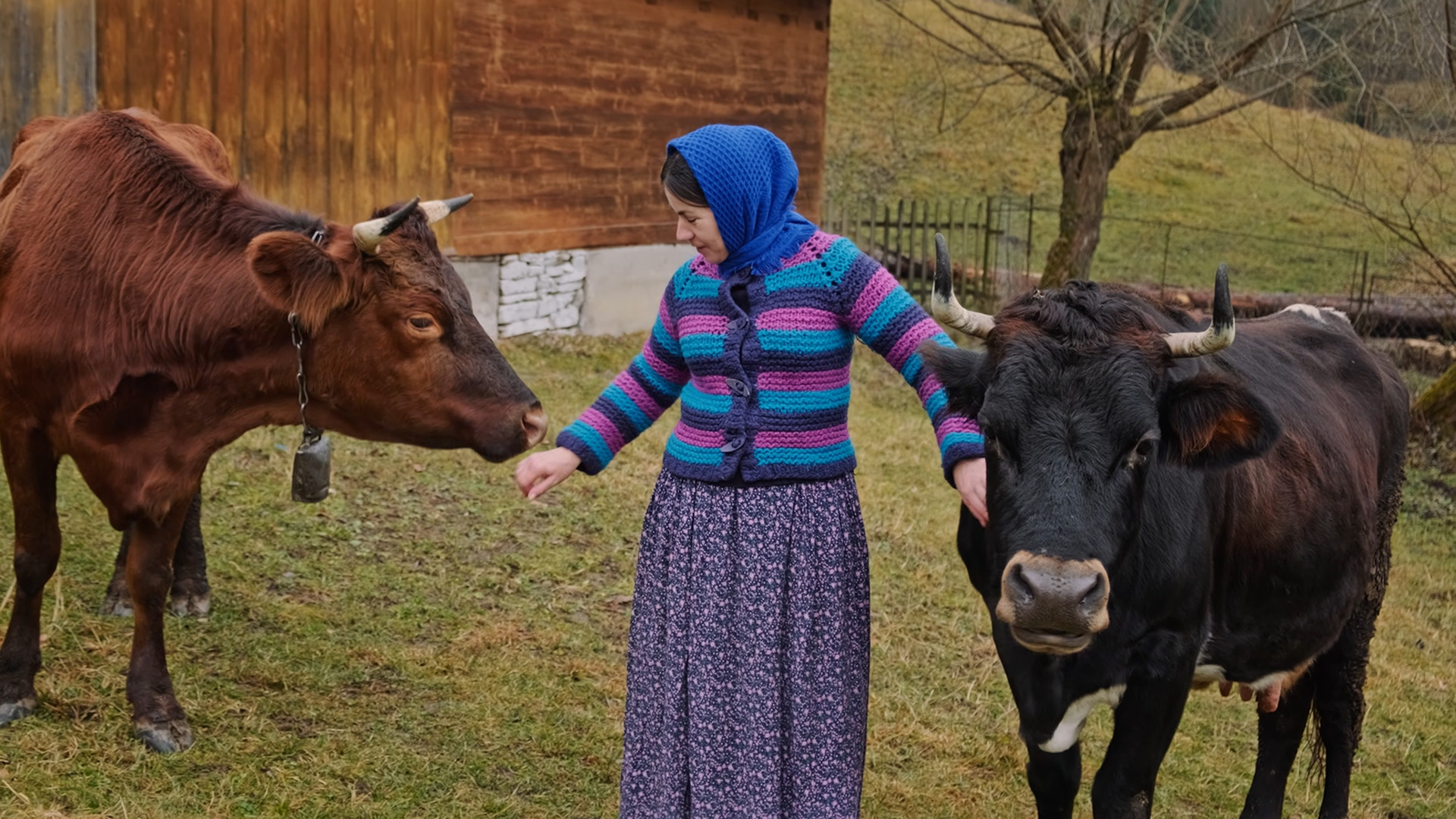
Maria’s house sits high on a slope where the houses are scattered and the silence is profound. Living here means being prepared for everything yourself. In this part of the world, winters are long and neighbors are distant. To live in these mountains is not a choice of leisure, but a commitment to a specific kind of work.
The day begins with the sound of bells. Maria’s three cows move across the grass, each wearing a heavy metal bell that rings with every step. In the dense forests nearby, wolves and bears are a constant presence. These bells are a functional necessity; they allow Maria to track her animals through the fog or the trees, acting as a thin line between safety and loss.
Nearby, a small flock of sheep stays close together. For Maria, there is no distinction between "work" and "life." She depends on the animals for milk and wool, and they depend on her for survival. It is a quiet, mutual obligation.
The Kitchen of Memory
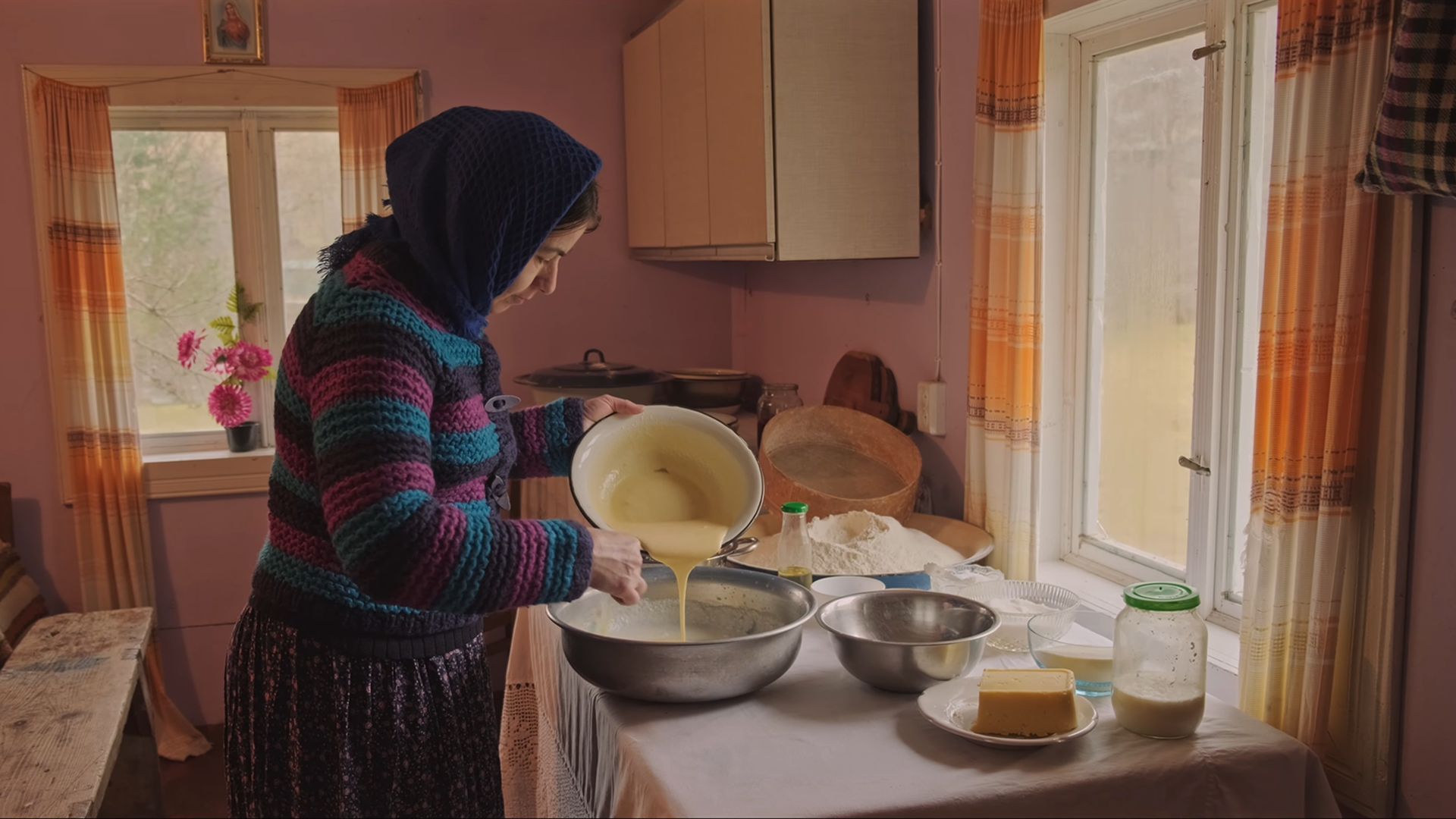
After milking the cows by hand, Maria moves into her kitchen. It is a modest space where the light falls across a wooden table worn smooth by years of use. Here, cooking is not guided by written recipes or digital timers, but by memory and the tactile feel of the ingredients.
In the morning, she prepares a traditional cherry cake. The process is slow and rhythmic: sifting flour, beating eggs with sugar, adding homemade butter and sour milk. She uses cherries harvested from her own trees, pitted and canned long ago to last through the colder months.
The cake bakes until the kitchen smells right. It is simple, nourishing food, made to be eaten in the quiet of a house where the only sound is the wind outside.
Small Defenses and Constant Preparation
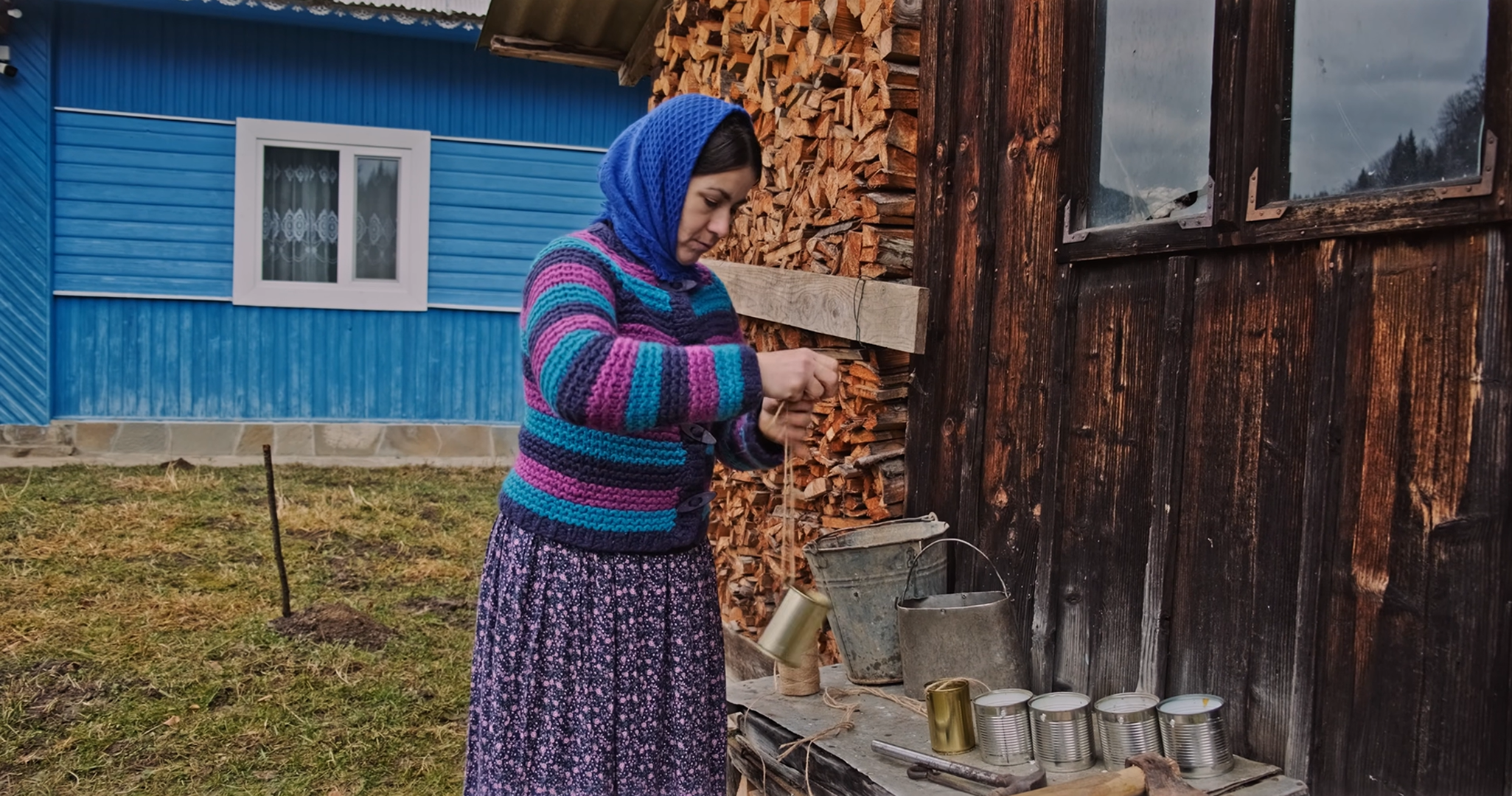
Even the simplest tasks in Maria’s day are tied to the environment. While her cows drink from a mountain stream, Maria gathers fallen branches for firewood. Preparation never truly stops; even on a calm afternoon, she is thinking of the fire needed for the coming night.
In the yard, Maria maintains a unique system of defense. She hangs empty metal cans from wooden stakes with string. When the mountain breeze picks up, the cans knock together softly. This improvised alarm serves a practical purpose: the unexpected noise helps warn wild animals away from her home after dark. It is a small, human intervention in a wilderness that never fully sleeps.
The Evening Ritual
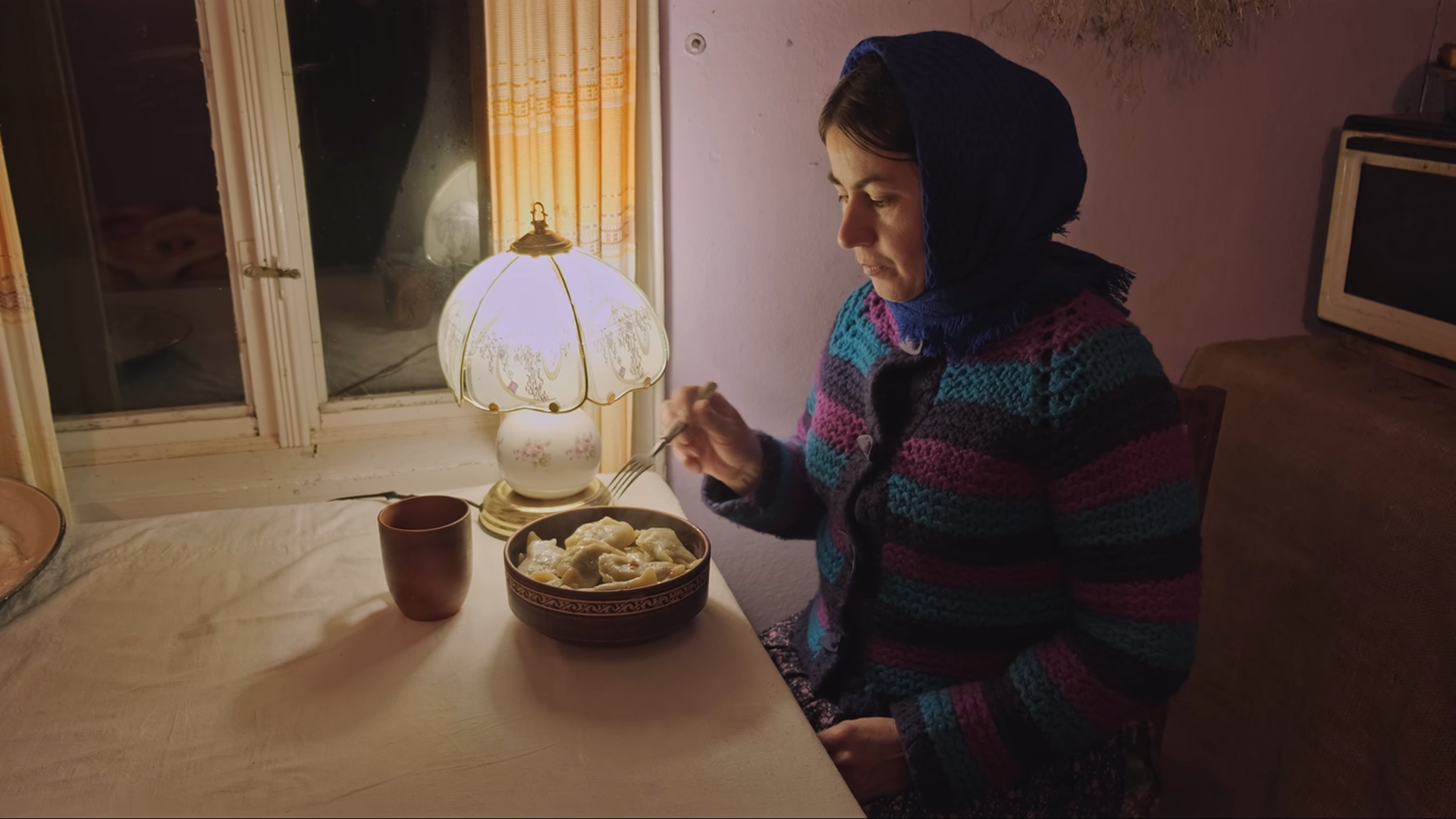
As the light fades, Maria returns to the kitchen for one final task. Dinner is handmade dumplings filled with poppy seeds and cherries. The dough is rolled thin, cut into circles, and sealed by hand—a repetitive, meditative process that has been passed down through centuries of mountain living.
She eats by the soft glow of a lamp as the yard outside turns to shadow. The distant clink of cowbells and the occasional rattle of the metal cans are the only sounds in the night air.
This documentary is not a spectacle of survival, nor does it seek to romanticize the hardships of rural isolation. It is a study of what it means to live in balance with the land, where life is sustained by animals, fire, and the knowledge of one's own hands.
To see this rhythm in motion and experience the silence of the Carpathians, the full documentary film is available this evening, January 28, 2026. It offers a glimpse into a reality that words alone cannot fully capture.
Subscribe to the channel so you don’t miss this release and all those to follow.