How to Slow Down When Life Feels Too Fast (A Simple 10-Minute Evening Ritual)

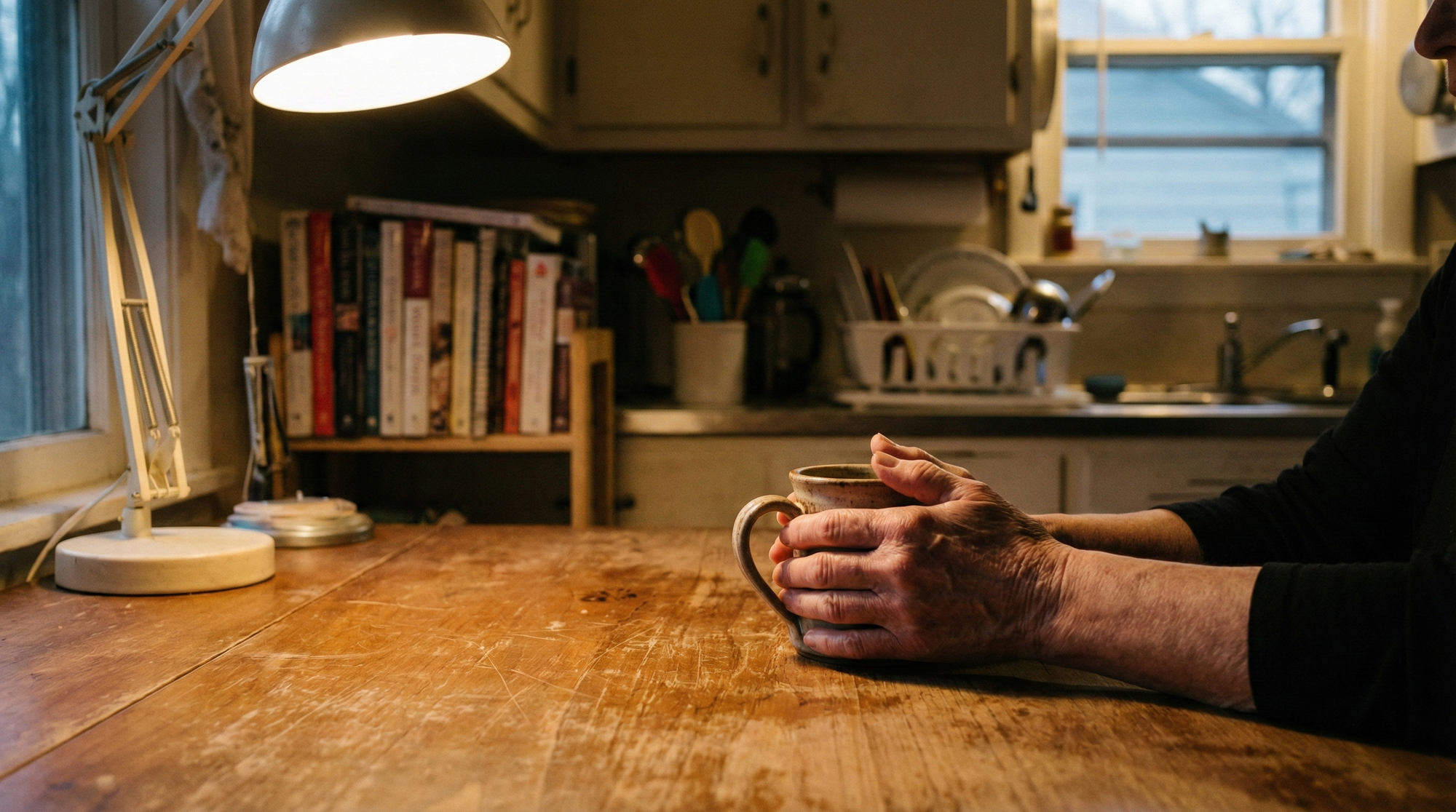
There is a specific kind of tiredness that doesn't go away with sleep. It’s that humming, buzzy feeling in the chest that settles in around 7:00 PM. You’ve finished the dishes, the house is technically quiet, but your mind is still vibrating at the frequency of a busy afternoon.
I know that feeling well. For years, I thought the answer was simply to go to bed earlier. But I’d lay there in the dark, my eyes wide open, staring at the ceiling while my brain replayed conversations from three days ago or worried about a grocery list for next Tuesday. It felt like I was a car that had been driven at eighty miles an hour all day, and then suddenly the engine was cut, but the metal was still ticking and hot to the touch.
We live in a time where our attention is pulled in a dozen directions before we’ve even had our first cup of coffee. By the time evening rolls around, we aren't just tired; we are overstimulated. We are "full up." Learning how to slow down isn't about finding more time—we all have the same twenty-four hours—it’s about changing the quality of that time. It’s about finding a way to let the engine cool down properly before we try to rest.
Why slowing down feels so difficult
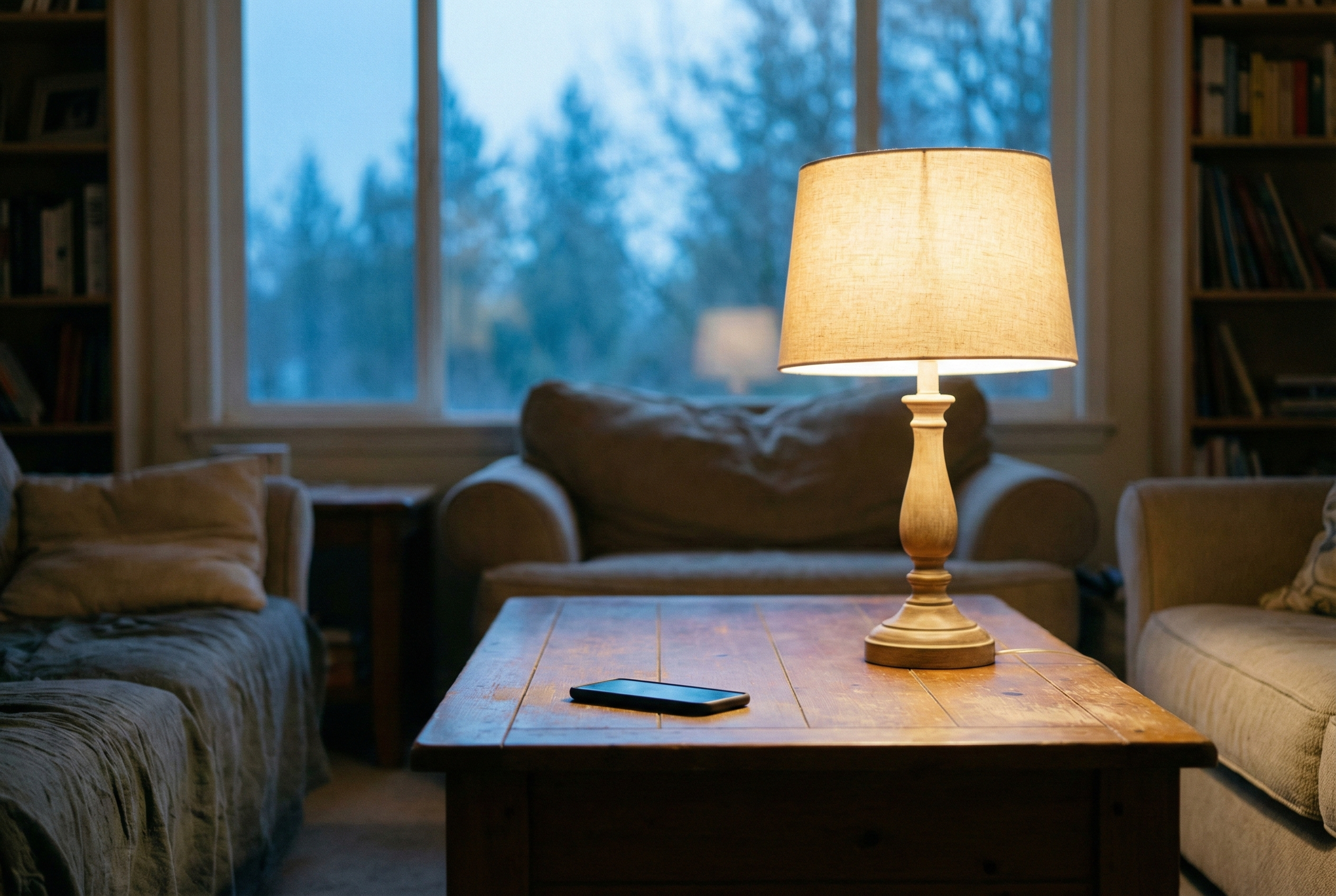
If you find it hard to sit still, you aren't alone, and there is nothing wrong with you. We’ve spent the last few decades being conditioned to respond to every "ping" and "buzz" from our pockets. Our nervous systems have become accustomed to a state of high alert. When things finally get quiet, that silence can actually feel uncomfortable, or even anxiety-inducing.
I remember when my grandmother used to sit on her porch for an hour every evening. She didn’t have a book, she didn't have a radio, and she certainly didn't have a phone. She just sat. To my younger self, it looked like boredom. Now, I realize it was her way of processing the day. She was letting the dust settle.
Today, we don't let the dust settle. We fill every "gap" in our day—waiting in line, sitting in the car, or the hour before bed—with more input. We check the news, we scroll through photos of people we haven't seen in twenty years, or we play games on our tablets. Our brains never get a moment to just be. This constant input keeps our nervous system in a state of "fight or flight," even when we are safe at home in our favorite armchair.
Slowing down is a skill, not a personality trait

We often talk about "calm people" as if they were born with a different internal wiring. We think, Oh, I could never do that; I’m just too high-strung. But I’ve come to believe that slow living is a craft, much like woodworking or gardening. It’s something you practice, and frankly, something you’re allowed to be bad at for a while.
When I first tried to implement a screen-free evening, I lasted about twelve minutes before I felt a physical itch to check my email. It felt like I was missing out on something vital, though I couldn't have told you what it was.
The goal isn't to suddenly become a person who meditates for three hours a day. The goal is to build a "low-stimulation" muscle. You start small. You learn to tolerate the quiet. You learn that the world won't stop spinning if you don't know the news for a few hours. Eventually, that quiet doesn't feel empty anymore—it feels spacious. It feels like a relief.
Why evenings matter more than mornings
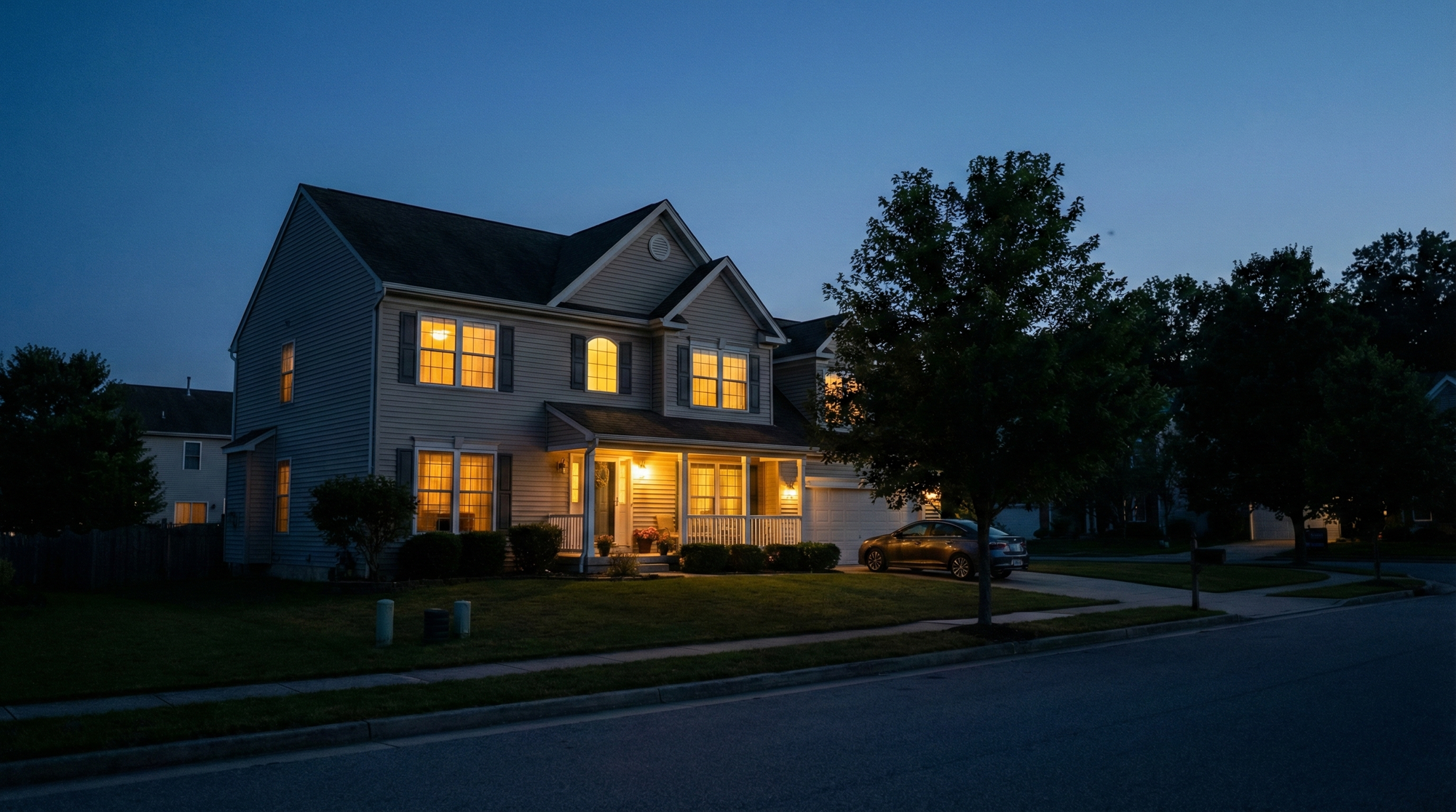
There is a lot of talk these days about "morning routines"—waking up at the crack of dawn to exercise or journal. And while that’s fine for some, I’ve always found that the evening is where the real work of a quiet life happens.
If you go to bed stressed, you wake up stressed. If you spend your last waking hour staring at a bright screen, your brain thinks it’s midday, and your sleep will be shallow and restless. The evening is our chance to signal to our bodies that the "danger" of the day—the deadlines, the traffic, the social obligations—is over.
A solid evening routine is like a bridge. It takes us from the frantic energy of the productive world to the soft, restorative energy of the private world. When we give ourselves a proper transition, we find that we don't just sleep better; we live better. We show up to the next day with a full tank rather than just enough to get by.
The 10-minute evening ritual
I want to share a simple way to calm the nervous system that takes exactly ten minutes. You don't need any special equipment. You don't need to download an app. In fact, the absence of technology is the whole point.
Find a time about an hour before you intend to sleep. This isn't something you do in bed; it’s something you do to get ready for bed.
Minutes 0–2: The Great Silence
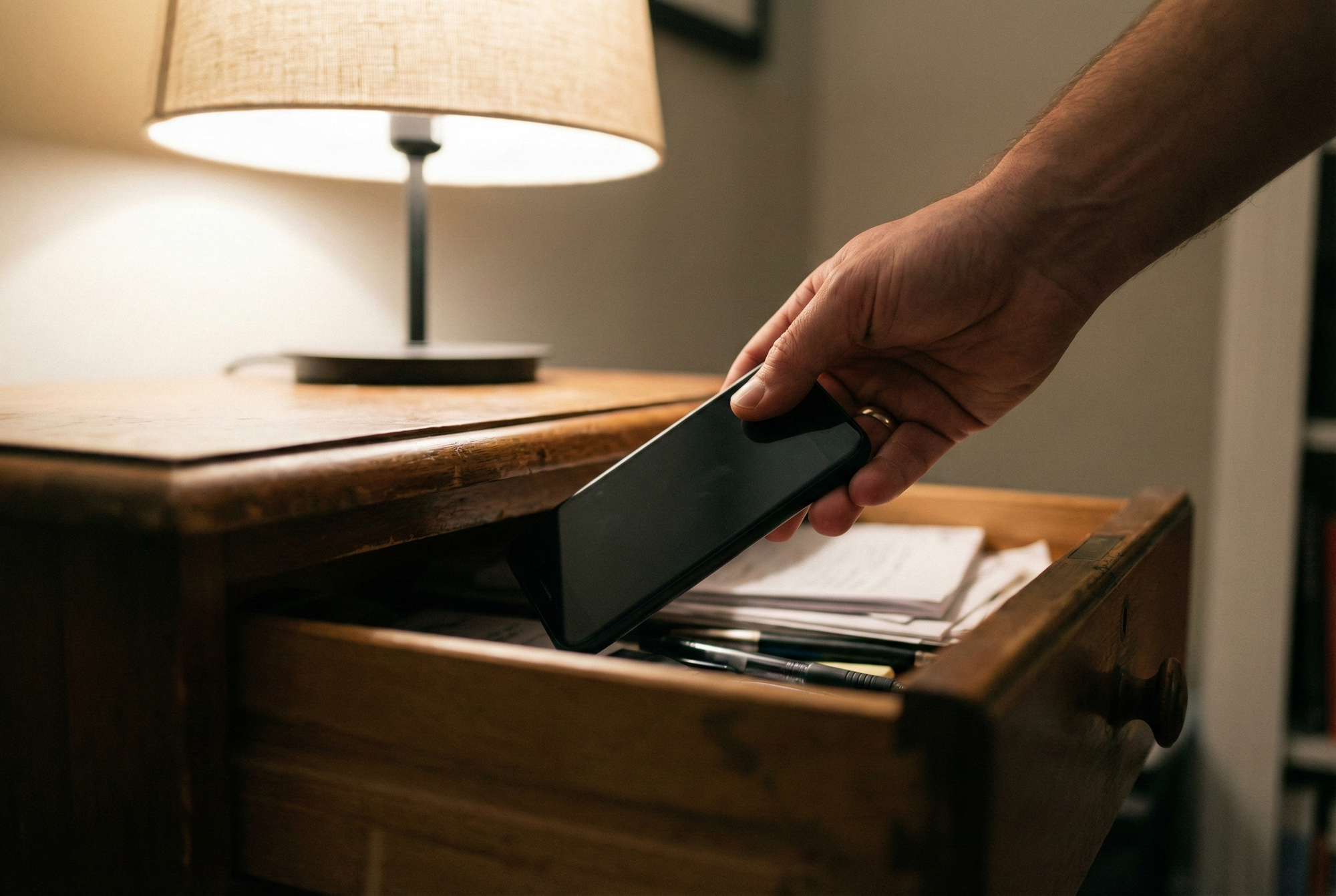
The first step is the hardest: Put your phone in a drawer. Not on the nightstand, not face down on the coffee table—in a drawer. There is something psychologically powerful about physically hiding the device. For these ten minutes, you are "off the grid."
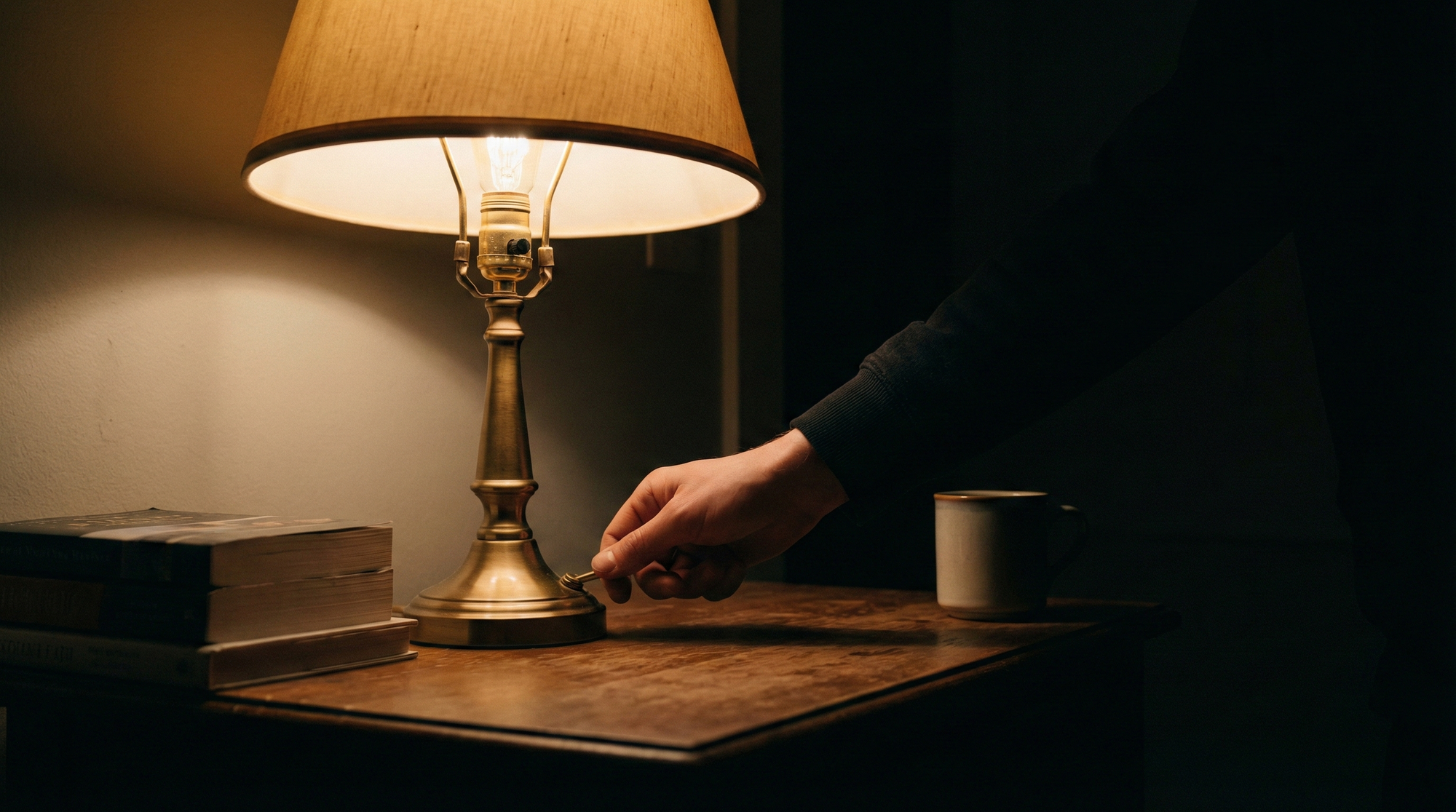
Walk through your main living space and turn off the overhead lights. Switch on a small lamp or light a single candle. We are trying to mimic the natural fading of the sun. The world is getting smaller and darker, and that’s a good thing.
Minutes 2–5: The Physical Wash

Go to the bathroom and wash your hands and face. Do it slowly. This isn't about hygiene as much as it is about the sensation of the water. Feel the temperature. Feel the texture of the towel. It sounds overly simple, but focusing on a physical sensation pulls your energy out of your head and back into your body.
If you’re feeling particularly stressed, I like to hang up my "day clothes" and put on something soft. It’s a literal shedding of the day’s skin.
Minutes 5–8: The Observation
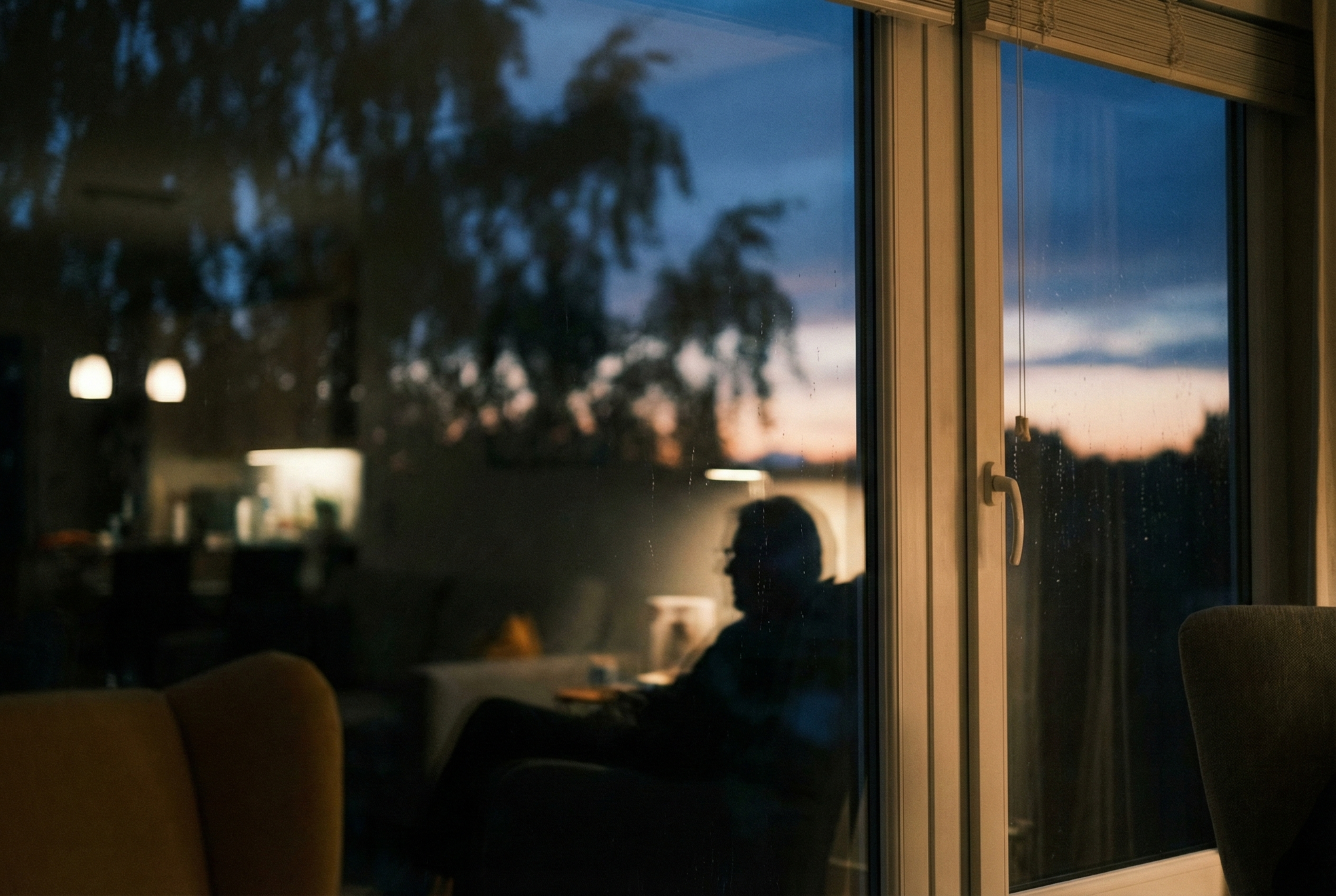
Sit down. You can sit on your porch, at your kitchen table, or in your favorite chair. Don't pick up a book yet. Just sit.
Look around the room or out the window. Notice three things you can see. Maybe it’s the way the shadow of a tree hits the fence, or the sound of the refrigerator humming, or the feeling of the wood grain on the table. You aren't "meditating" in the formal sense; you are just being a witness to your own life. You are checking back in with your home.
Minutes 8–10: The Unloading
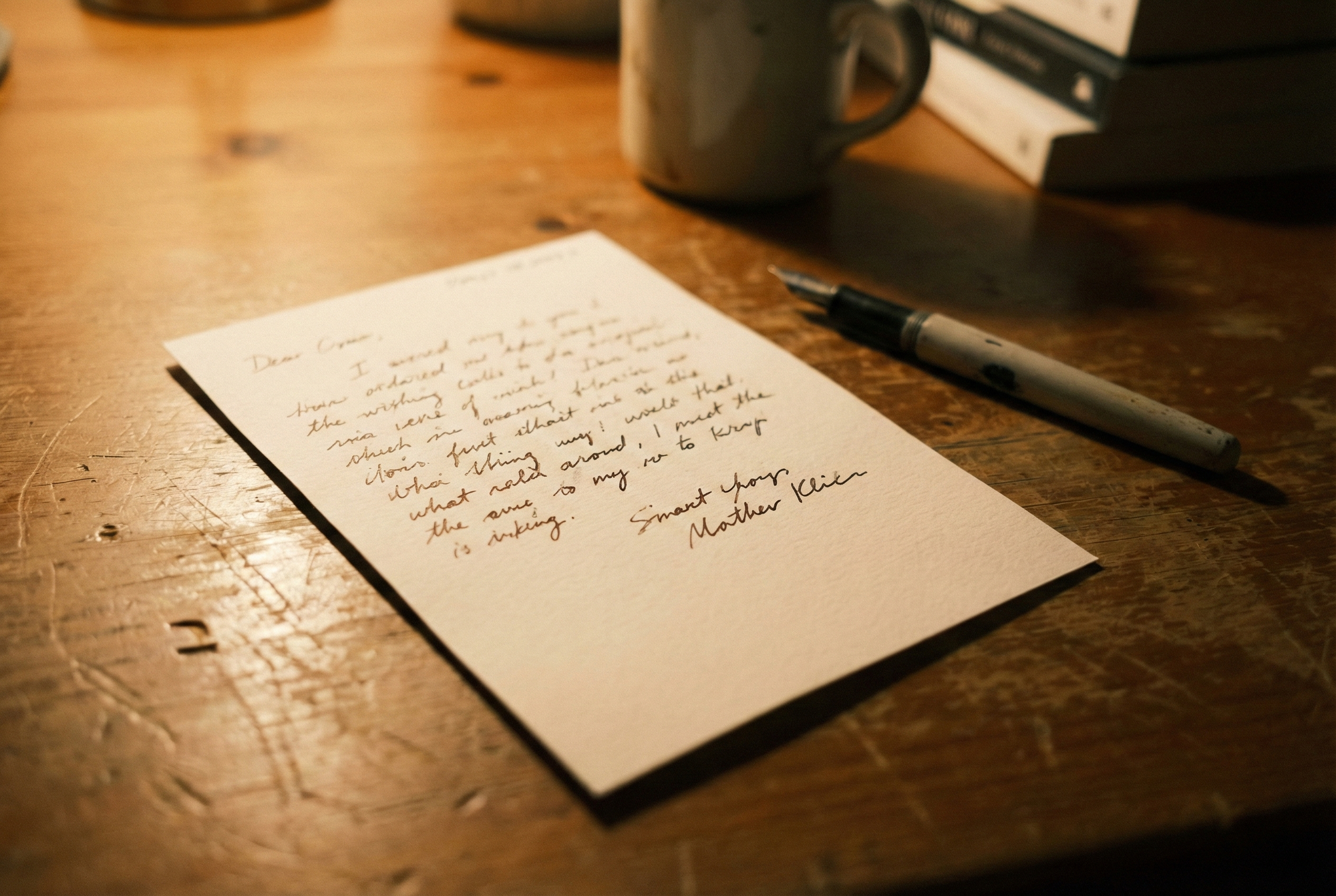
Take a piece of paper—not a phone—and a pen. Write down three things that are on your mind. They don't have to be "gratitudes" if you aren't feeling grateful. They can just be "to-dos" or "worries."
"Buy milk." "The weird noise the car made." "I'm worried about my daughter's job."
Once they are on the paper, they don't have to live in your brain anymore. The paper is holding them for you. You can deal with them tomorrow. For now, you are done.
When ten minutes feels impossible
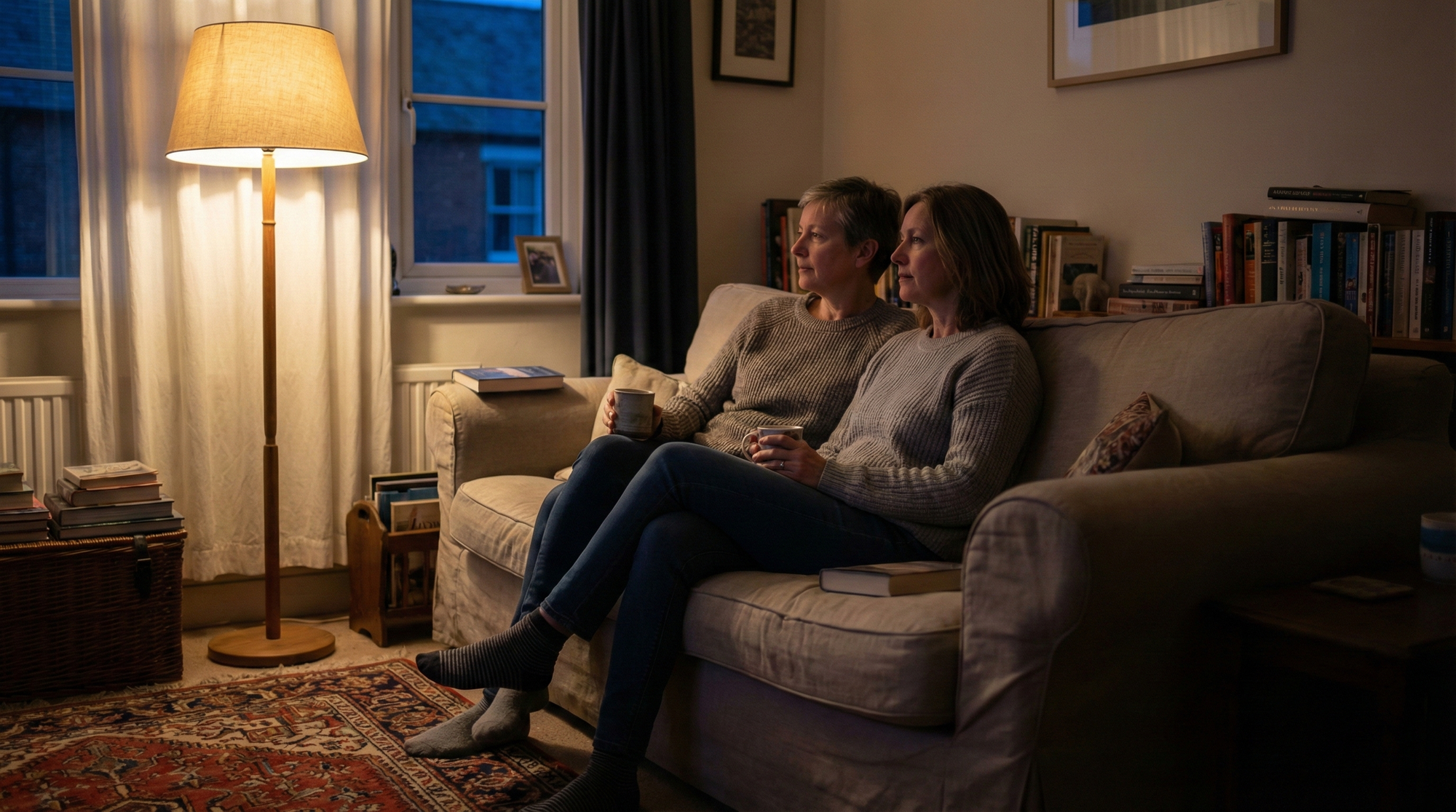
We all have those nights. Maybe the grandkids are staying over, or work ran late, or you’re just plain exhausted. On those nights, ten minutes can feel like an hour.
If you can’t do the full ten minutes, give yourself two. Put the phone away, take one deep breath, and drink a small glass of water in the dark. That’s it.
The point isn't perfection; it’s the intention. It’s the act of saying to yourself, “My peace is worth two minutes of my time.” Never let the inability to do it "perfectly" stop you from doing it at all. A screen-free evening of even five minutes is better than none.
How to make this ritual stick
In our culture, we are taught to "optimize" everything. We want to track our habits and check boxes. I suggest you don't do that here. Don't put "10-minute ritual" on a checklist.
Instead, try to associate it with a feeling. Think of it like coming home after a long trip. You know that sigh of relief when you finally drop your bags and see your own hallway? That’s what this ritual should feel like.
If you miss a night, don't worry about it. Don't "make it up" the next day. Just come back to the quiet when you can. It’s always there, waiting for you. The more you do it, the more your body will begin to crave it. You’ll find yourself looking forward to that moment when the phone goes into the drawer and the lights go low.
A quiet life is not an empty life
There is a common fear that if we slow down, we’ll become boring or lose our edge. We worry that if we aren't constantly "doing," we aren't "being."
But I’ve found the opposite to be true. When I slow down, I notice the small, beautiful details that I used to rush past. I notice the way the light changes in October. I hear the actual tone of my husband’s voice instead of just the words he’s saying. I taste my tea.
A quiet life is a full life. It’s full of presence. When we stop racing toward the next thing, we finally have the capacity to enjoy the thing we are currently doing. This simple evening routine is a way of reclaiming your life from the noise. It’s a way of saying that you are more than your productivity or your notifications. You are a person, in a home, at the end of a long day, and you deserve to be still.
Final thoughts
Tonight, as the sun begins to dip below the horizon, I invite you to try it. Just ten minutes. The emails will be there in the morning. The news will still be happening tomorrow. The world is very loud, and it asks a lot of us, but for these few moments, you don't owe it anything.
Let your heart rate slow. Let your shoulders drop away from your ears. Listen to the house breathe. You’ve done enough for today. It’s okay to let go now.
FAQ
Do I have to do this at the exact same time every night? Not at all. Life is unpredictable. Some nights you might do it at 8:00 PM, others at 10:00 PM. The timing matters less than the sequence of slowing down before you try to sleep.
What if my spouse or partner wants to watch TV? You don’t have to force them to join you. You can find a quiet corner, a porch, or even the kitchen table. Often, when one person starts practicing a calmer evening routine, others in the house naturally start to follow suit because the atmosphere of the home changes.
I feel guilty just "sitting there." How do I get past that? Guilt is just a leftover symptom of a society that values constant motion. Remind yourself that rest is a biological necessity, not a luxury. You aren't "doing nothing"; you are allowing your nervous system to recover so you can be a kinder, more present person tomorrow.
Can I listen to music or a podcast? For these ten minutes, I recommend silence or natural sounds (like the wind or a fan). We are trying to give the brain a break from processing language and information. Let your own thoughts be the only "voice" you hear for a few minutes.